
In 1947, tits at Wytham Woods began laying their first eggs in late April. By 2022, the first egg was recorded on 28 March – almost a month earlier.
This dramatic shift is one of the clearest signs of a changing climate recorded through more than 75 years of research at Wytham Woods. From earlier breeding seasons to drought-stressed trees and emerging pests and diseases, long-term research is revealing how climate change is reshaping the Woods and the wildlife that depends on them.
A recent public walk through Wytham offered a glimpse into this research and the challenges it presents for the future management of one of the UK's most important long-term woodland research sites.
Birds are responding to warmer springs
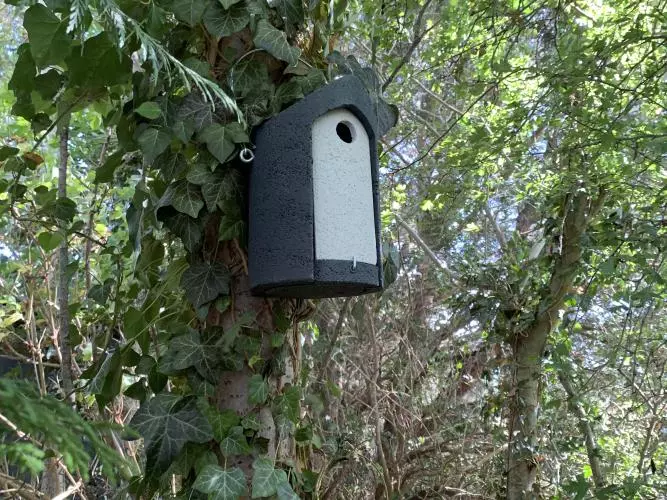
In 1947, researchers at the Edward Grey Institute installed the first 100 nest boxes in Marley Wood to study the breeding patterns of tits. Today, more than 1,000 nest boxes provide an extraordinary long-term record of how these birds respond to changing environmental conditions.
The timing of breeding is closely linked to the availability of food. Warmer spring temperatures mean oak trees come into leaf earlier, followed by the emergence of caterpillars that feed on the leaves. These caterpillars are an important food source for tit chicks, creating strong evolutionary pressure for the birds to adjust their breeding cycle.
Tits are not the only species responding to a changing climate. Many ecological events are shifting, including when plants come into leaf and flower and when insects emerge.
The challenge is that not all species can adapt at the same rate. If the timing of one species changes while the species it depends on does not, the consequences can ripple through the wider ecosystem.
The woodland canopy provides protection from heat
Climate change is not affecting every part of Wytham Woods in the same way.
Temperature records from permanent vegetation plots show that areas beneath the tree canopy have so far experienced less warming than more open areas. The shade provided by the trees helps to buffer the woodland floor from increases in temperature.
This was particularly noticeable during recent heatwaves. While much of the surrounding grassland dried out and turned brown, plants such as bramble beneath the woodland canopy remained green.
But this natural protection depends on the canopy remaining healthy.
Drought is putting trees under pressure
Hotter and drier summers can place trees under increasing stress, particularly when there is not enough water in the soil to maintain photosynthesis and growth.
Some trees respond by shedding their leaves early. This has been particularly noticeable in some of the sycamores at Wytham.
The Woods’ veteran oaks are also facing challenges. Although oak is generally relatively drought tolerant, many of Wytham’s old oaks are being overtopped by younger, taller ash and sycamore trees. This puts additional pressure on the older trees, particularly during periods of severe drought.
Researchers expect that some of the Woods’ older oaks could be lost over the coming years as these pressures combine.
Beech trees may also be vulnerable. Following the severe drought of 1975–76, thousands of beech trees died across the UK, providing a reminder of how extreme weather can affect woodland communities.
Climate change adds to the threat from pests and diseases
Climate change is also interacting with another major challenge for woodlands: the spread of pests and diseases.
Increased global travel and trade have helped pests and diseases move between countries, while changing environmental conditions can affect how successfully they establish and spread.
Researchers at Wytham are monitoring for threats including oak processionary moth, which has established in parts of southern England. An outbreak was previously reported in the Pangbourne area, and moth traps at Wytham are being used to monitor for any signs of the species.
The Woods are also experiencing the effects of ash dieback, a fungal disease that causes the decline and death of ash trees. The disease arrived in Britain on infected trees imported from continental Europe, although it would probably have reached the UK eventually through wind-blown spores.
Researchers are measuring the loss of ash canopy at Wytham and recording the death of individual trees. More frequent severe droughts and winter storms could add further pressure to already vulnerable trees.
What does this mean for carbon storage?
The changes taking place at Wytham highlight an important challenge: trees are part of the response to climate change, but climate change can make it harder for them to provide that benefit.
When trees are growing well, they remove carbon dioxide from the atmosphere and store some of that carbon in their wood and in compounds in the soil.
At Wytham, researchers have been measuring this process since 2009 in an 18-hectare research plot running north from the Chalet towards the River Thames.
But if trees lose their leaves early, lose parts of their canopy or die, the Woods will capture and store less carbon.
Researchers expect the effects of recent changes in tree health to become visible in the latest measurements from the plot, providing another way to understand how a changing climate is affecting the Woods.
A changing landscape
When Wytham Woods came to the University in 1942–43, climate change was not on the agenda.
In early 1947, Britain experienced severe cold spells, with deep snowdrifts blocking roads and railways. If someone had suggested then that Britain would become considerably warmer in the future, the prospect might have sounded appealing.
We now know that the effects of climate change are much more complicated.
A warmer climate does not simply mean a warmer woodland. It affects when birds breed, when plants grow, how much water trees can access, the spread of pests and diseases, and the ability of woodland to store carbon.
Wytham Woods offers something particularly valuable: a long-term record against which these changes can be measured.
The research carried out there is helping scientists understand how woodland ecosystems are responding to a changing climate, while providing evidence that can inform how these landscapes are managed in the future.
As the Woods continue to change, those decades of research will become increasingly important – not only for understanding the future of Wytham, but also for understanding the wider changes taking place across the UK's countryside.
Contact us
- oge@admin.ox.ac.uk
- 01865 614460