
Safeguarding the future of scarce butterflies
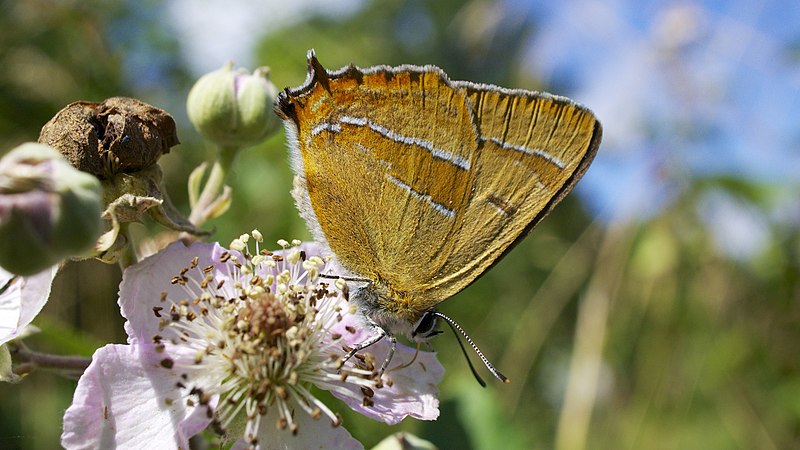
Image credit: Wikimedia commons
One of the loveliest things about being out in nature is the chance to see wildlife in abundance. And especially if that wildlife is rare or only found in our region.
Last year, the Oxford Green Estate team worked with Natural England to produce a ten-year plan on how to restore and manage Park Farm's biodiversity. One section of the plan highlighted how important the site was for brown hairstreak butterflies - a species that's rare in the area, and indeed throughout this part of England.
A Brown Hairstreak Management plan has now been written, after the University's Environmental Sustainability team funded a survey of the butterflies over two winters. This work identified key breeding locations for the butterflies, which lay their eggs on young blackthorn growth.
Armed with this insight, the Oxford Green Estate team will be adapting their hedge and scrub cutting regimes to make the most of this growth and give Brown Hairstreaks the best possible chance to thrive.
For more updates on this project and other conservation efforts, please follow Wytham Woods on X (formerly Twitter) and Instagram.
Contact us
- oge@admin.ox.ac.uk
- 01865 614460