
Behind the scenes: Student fieldwork at Wytham Woods
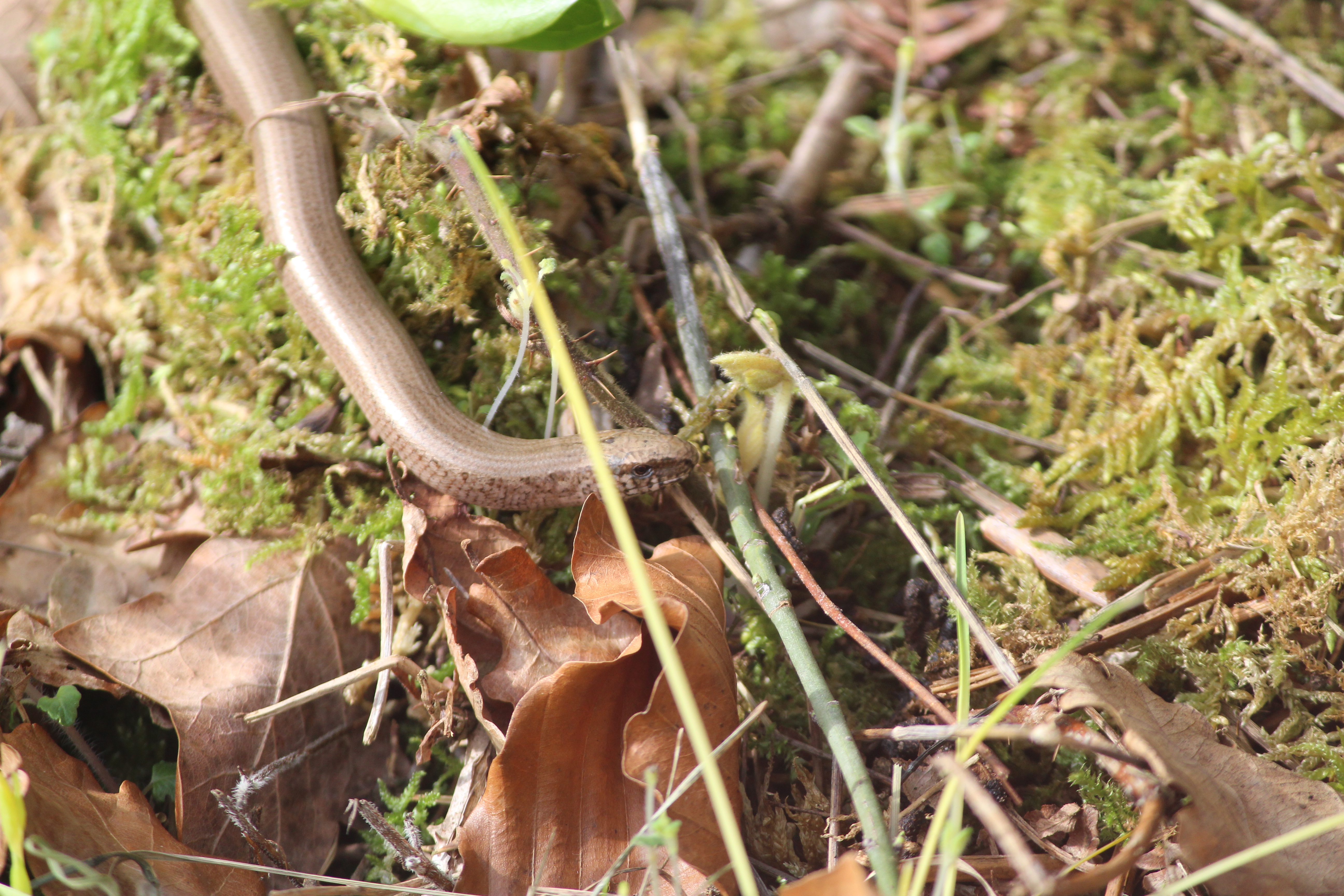
An adult female slow worm, the first reptile of student fieldwork at Wytham Woods.Jake Dudderidge
Jake Dudderidge is of one of many MBiol students (studying the new four-year Biology course offered by the University of Oxford) now carrying out fieldwork at Wytham Woods. Biology students will be able to use the practical experience gathered throughout their course to inform their 4th Year projects, and over the next few years we expect many of these student projects to take place not only in the Woods but across the wider estate.
Jake shared his experience of carrying out reptile surveys:
"I have carried out four reptile surveys so far on a survey route at Wytham Woods this year, contributing to the National Reptile Survey effort run by the Amphibian and Reptile Conservation Trust (ARC Trust). On each of these surveys at Wytham, at least one Slow worm (Anguis fragilis) - a species of legless lizard - has been found, with three being found on the most recent survey visit this past July.
These endearing lizards were photographed with emphasis on their head markings that allow individual identification. In future, data from this fieldwork can act as a baseline for research into the movements and genetics of Wytham's slow worms. Many thanks to Nigel Fisher, Tonya Lander, Keith Kirby, Tom Atkins, Kevin Crawford, and the survey coordinators Karen and Rob at ARC Trust for their enthusiasm and support."
Contact us
- oge@admin.ox.ac.uk
- 01865 614460